
Porta Potty Rental in Glendale, WI
Glendale is an incorporated city in Milwaukee County, Wisconsin, and we take portable toilet rental calls for any address in it. Call (888) 417-6737, answered 24/7, and we connect you with a provider that serves the site. Freezing weather is the main planning factor: about 123 nights a year reach 32°F (NOAA normals), which matters for any unit that carries water.
Updated 2026-10-13
- 1Call with the site address, dates and headcount.
- 2We connect you with a provider that serves the site.
- 3The provider confirms units, price, delivery, servicing and pickup.
Glendale at a Glance
Climate figures: NOAA 1991–2020 normals from the Milwaukee Mitchell Ap, WI station, about 12 miles away.
Planning Around the Weather
DOE's Building America map puts Milwaukee County in the Cold climate region (IECC 2021 zone 5A, PNNL county guide). Winters in this region are long enough that freezing, not heat, is usually the main limit on units that carry water.
Near the Shoreline
Glendale's Census reference point is about 1 mile from the shoreline in the Census Bureau's TIGER coastline layer (the layer includes Great Lakes shores and some bays). Beach and waterfront sites mean sand and soft ground: trucks need a firm approach, ADA units a firm route (loose sand is not one), and exposed units staking.
Freezing Nights
About 123 nights a year drop to 32°F or below, more than three in four U.S. places in our data, so freezing weather covers a large part of the year. Anything that holds fresh water freezes first: hand-wash stations, deluxe flush tanks and trailer plumbing. For winter dates, ask for winterized units or a heated restroom trailer, or plan on sanitizer.
Snow and Access
Average snowfall is about 49 inches a year, more than three in four U.S. places in our data, enough to bury a ground-level path several times a winter. Service trucks need a plowed path to each unit all winter, and a cleared, packed pad keeps units level as snow piles up; agree who clears the route.
Job Sites and Home Projects
Building in Existing Neighborhoods
Only 1.8% of Glendale's housing units were built in 2010 or later (ACS 2020–2024), under half the U.S. share of 11.4% and lower than three in four U.S. places in our data. Work on existing homes usually means an occupied house: put the crew's unit on the driveway or a side yard the truck can reach, so nobody walks through the home.
Older Homes and Remodels
The median year built for Glendale's housing is 1965 (ACS 2020–2024), older than three in four U.S. places in our data. Houses built around 1965 are now more than half a century old; kitchen, bath and roof jobs on them are construction work under OSHA 1926.51, and if the crew cannot use the home's bathroom, the rule calls for a toilet on site.
Lead-Safe Renovation
Most of Glendale's housing, about 75% of units, was built before 1980 (ACS 2020–2024). EPA’s Renovation, Repair and Painting Rule covers paid work that disturbs painted surfaces in homes built before 1978, and OSHA’s lead standard for construction (29 CFR 1926.62) requires adequate hand-washing facilities for workers exposed to lead. If the crew will sand, scrape or demolish old paint, put one of the hand-wash stations next to the toilet.
Apartments, Townhouses and Rentals
The most common housing type is detached houses, about 62% of units (lower than most U.S. places in our data), followed by buildings with five or more units at about 30% (ACS 2020–2024). Detached houses usually have a driveway or yard where a crew's unit can stand within reach of the service truck. Apartment and condo projects bring larger crews, and a property manager decides where units go. About 31% of occupied homes are rented (owner share higher than most U.S. places in our data), so check who controls the property before a unit goes on it.
OSHA 29 CFR 1926.51 scales with headcount: 45 workers on an apartment or condo site need 2 toilet seats and 2 urinals, 210 need 5 of each. More on sizing: construction rentals in Wisconsin.
Events, Weddings and Parties
A three-hour winter event for 1,000 people needs 8 units on the PSAI event chart, or 9 to 10 with alcohol (PSAI adds 10–20%). Every cluster of restrooms needs at least 5% accessible units, rounded up; for winter events, clear the route to the ADA unit at full width, not just a footpath.
Cold, not heat, limits the outdoor season: from late fall into spring, ask for a heated restroom trailer or units that do not depend on running water. For a party at an apartment complex or a rented home, the property manager or landlord decides where units can stand. For beach and waterfront events, units stand at the edge of the sand on firm ground the service truck can reach. More: event rentals in Wisconsin and wedding restrooms in Wisconsin.
Who to Ask About Local Rules
Glendale is an incorporated city with its own municipal government. For an event on public land, or a unit that will stand on a street, sidewalk or in a park, ask the Glendale city government before you book what applies.
Beaches and waterfront parks can be managed by a separate parks, port or state agency; ask whoever manages that land.
Rental Types Available
Tell us the units you want; the provider serving your site confirms what's available.
Event Porta Potty Rental
Festivals, fairs, races, parties and community events of any size.
Construction Porta Potty Rental
Job-site units sized to OSHA's construction toilet requirements.
Wedding Restroom Rental
Restroom trailers and deluxe units for outdoor ceremonies and receptions.
Restroom Trailer Rental
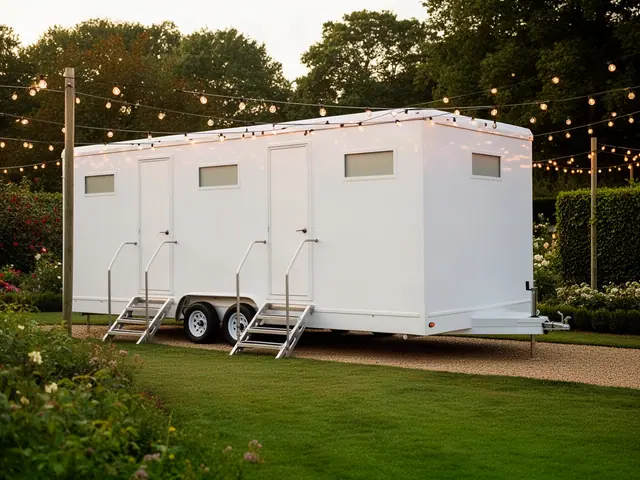
Flushing toilets, running water and climate control in a towable trailer.
Hand-Washing Station Rental
Freestanding sinks with fresh water and soap for events and job sites.
Nearby Locations
- Whitefish Bay, WI 2 mi
- Fox Point, WI 3 mi
- Shorewood, WI 3 mi
- Brown Deer, WI 4 mi
- Milwaukee, WI 5 mi
- Wauwatosa, WI 7 mi
Also in Milwaukee County
Straight-line distances between Census place points; not a service-area or travel-time claim. All Wisconsin locations.
Questions About Renting in Glendale
Can I rent porta potties in Glendale, WI?
Yes. Call (888) 417-6737, answered 24/7, with the Glendale address and dates; we connect you with a provider that serves the site, and the provider confirms units, price, delivery, servicing and pickup.
What weather should I plan for in Glendale?
NOAA 1991–2020 normals from the Milwaukee Mitchell Airport, WI station, about 12 miles away: about 9 days a year at or above 90°F, 123 nights at or below 32°F, 35 inches of precipitation and 49 inches of snow. Plan for freezing first: water-carrying units need winterizing or heat.
Do I need a porta potty for a home remodel in Glendale?
If the crew has no bathroom to use, yes: OSHA 1926.51 treats a remodel crew like any other, and one unit covers up to 20 workers. Glendale's median home dates from 1965.
How many toilets does an apartment renovation in Glendale need?
It depends on the crew, not the building: 15 workers need 1 toilet, 45 need 2 toilet seats and 2 urinals (OSHA 1926.51). About 30% of Glendale's housing units are in buildings with five or more units (ACS).
Who do I ask about a permit for an event or a unit on the street in Glendale?
Ask the Glendale city government. Its special-events or street-use office can say what applies to your date.
What affects the price of a porta potty rental?
Unit type, number of units, rental length, servicing frequency and how easy the site is to reach. The provider quotes before you book.

Don't know where to start?
Call now and tell us about your event or job site. We will help you work out the units you need and connect you with a provider that serves your location.
(888) 417-6737Phones answered 24 hours a day, 7 days a week.