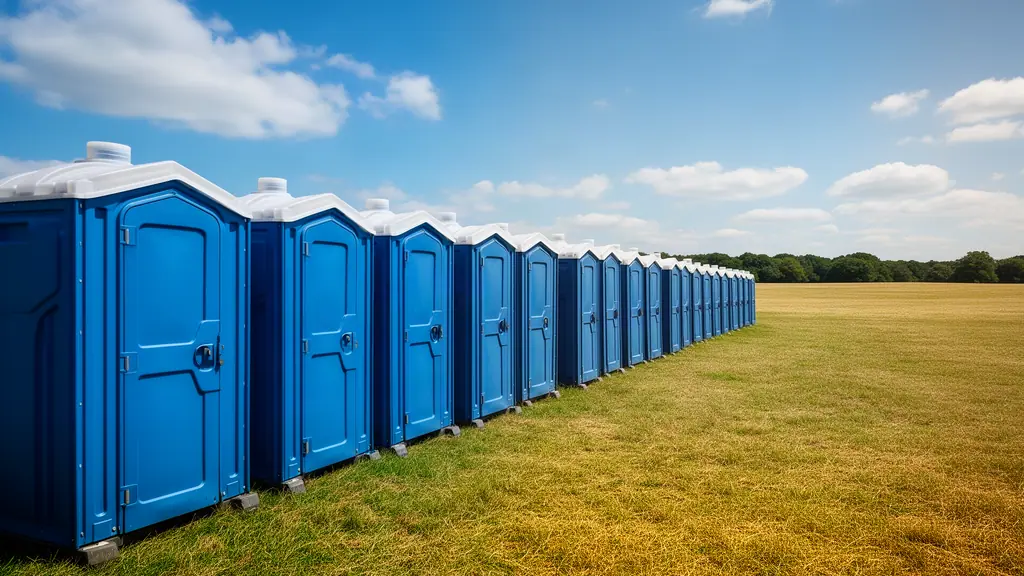
How many porta potties does an event need?
The Portable Sanitation Association International (PSAI) publishes a planning chart based on average crowd size and how long people stay. Selected rows:
| Crowd | 1 hr | 2 hrs | 3 hrs | 4 hrs | 5 hrs | 6 hrs | 7 hrs | 8 hrs |
|---|---|---|---|---|---|---|---|---|
| 500 | 2 | 4 | 4 | 5 | 6 | 7 | 9 | 9 |
| 1,000 | 4 | 6 | 8 | 8 | 9 | 9 | 11 | 12 |
| 2,000 | 5 | 6 | 9 | 12 | 14 | 16 | 18 | 20 |
| 5,000 | 12 | 15 | 20 | 25 | 31 | 38 | 44 | 50 |
| 10,000 | 15 | 25 | 38 | 50 | 63 | 75 | 88 | 100 |
PSAI's chart assumes no pumping service during the event and an even mix of men and women. If alcohol is served, PSAI says to add 10–20% more units. Use our porta potty calculator for your own numbers.
Do I need ADA-accessible units at an event?
Yes, if the event is open to the public. The U.S. Access Board's guide to the ADA Standards says that where portable single-user toilets are provided, including at temporary events, at least 5% of the units in each cluster must be accessible. Percentages round up, so every cluster needs at least one. See ADA porta potty rental.
What should I have ready when I call?
- The site address, and where on the property the units should stand
- Event dates, start and end times, and set-up and pickup windows
- Expected attendance, including staff, vendors and volunteers
- Whether food or alcohol will be served
- Any permit or venue rules about restroom counts or placement
Where should event restrooms go?
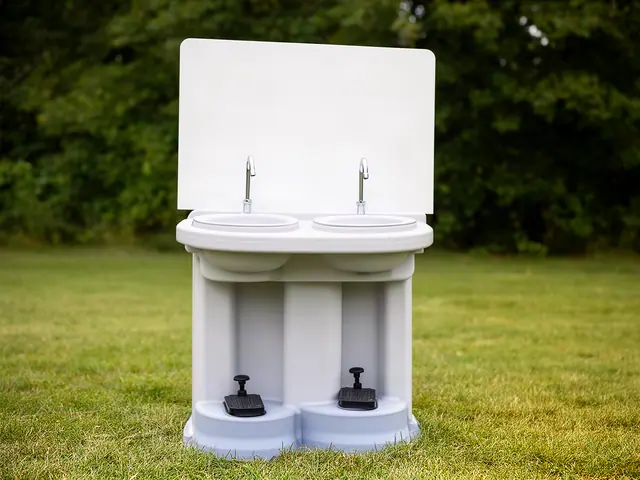
Put them on firm, level ground that a service truck can reach, away from food prep, and spread across large sites so lines stay short. Place hand-wash stations next to the restrooms and near food areas, and keep accessible units on an accessible route with no steps or deep grass in the way.